
A Guide to One-Man Doom: Looping
Build Layers Live
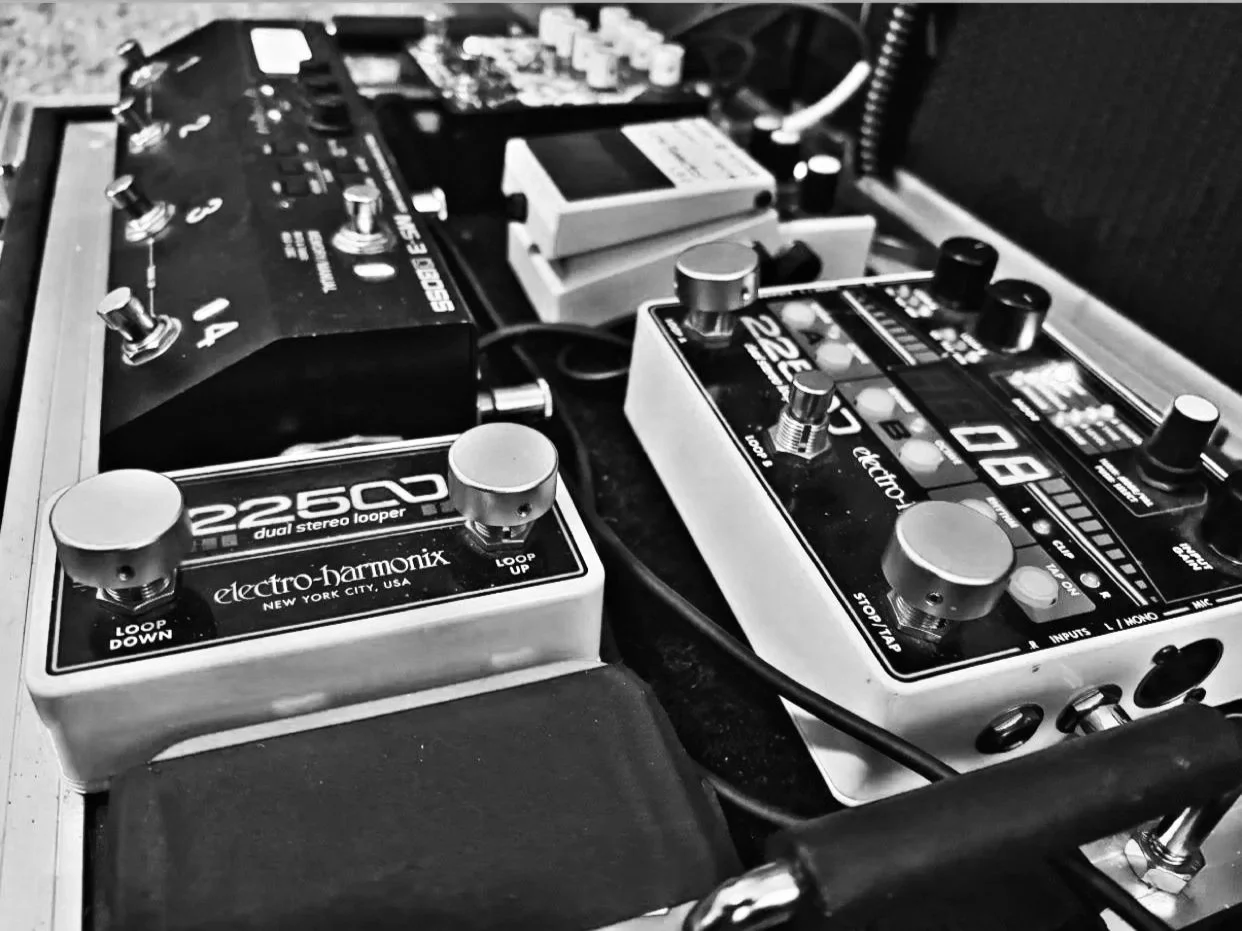
Using the Electro-Harmonix 22500 for Live Looping
If you want to sound massive as a solo musician, a looping rig can turn one guitar into an entire wall of sound. The right setup lets you build layers live, transition organically between sections, and create the hypnotic repetition that makes doom metal feel immersive instead of empty.
This guide covers the pedals, signal chain, looping strategy, and performance techniques needed to build a one-man looping rig that feels alive onstage.
Why Looping works for Doom Metal
Doom metal naturally lends itself to looping because the genre already emphasizes:
Repetition
Texture
Slow development
Dynamic buildup
Atmosphere
Bands influenced by drone, sludge, and post-metal often rely on evolving layers instead of rapid riff changes. A looper essentially lets one person become multiple guitarists at once.
Artists like Aaron Turner (Isis, Sumac, Neurosis), Michael Sullivan (Russian Circles), and Justin Broadrick (Godflesh), use repetition, ambience, and texture stacking to create density that feels larger than a traditional guitar setup.
The Core Philosophy of a Doom Looping Rig
A great looping rig should do three things:
Build evolving layers
Preserve clarity in heavy tones
Avoid sounding mechanical or repetitive
The biggest mistake beginners make is looping fully distorted parts repeatedly. That quickly becomes muddy and static.
Instead:
Loop cleaner foundations
Add gain later
Use modulation and delay for movement
Create contrast between layers
Essential Components
The Looper Pedal
Your looper is the center of the entire system.
Look for:
Multiple loop tracks
Undo/redo
Reverse and half-speed
MIDI sync (optional)
Dedicated stop switch
Popular options:
Boss RC-5 or RC-500
Boss DD-500 / DD-200
Electro-Harmonix 22500
Pigtronix Infinity
Line 6 DL4
TC Electronic Ditto
Fuzz and Distortion
Doom lives and dies by its gain structure.
A common approach:
Fuzz for massive saturation
Overdrive for tightening mids
Distortion for articulation
Popular doom choices:
Big Muff variants
RAT-style distortion
HM-2 style pedals
Sunn Model T-inspired preamps
Delay and Reverb
This is where looping becomes cinematic instead of repetitive.
Long ambient trails:
Fill empty space
Hide loop seams
Create movement
Add emotional depth
Key features:
Analog/tape voicing
Self-oscillation
Modulated repeats
Shimmer or dark ambience
Good combinations:
Tape delay + hall reverb
Reverse delay + plate reverb
Modulated delay + drone loops
I use both an Earthquaker Devices Avalanche Run and a Line 6 DL-4 for degrading textures.
Example Signal Chain
A common doom looping chain looks like this:
Guitar
↓
Tuner
↓
Compressor
↓
Overdrive
↓
Fuzz
↓
Modulation
↓
Delay
↓
Reverb
↓
Looper
↓
Amp
Placing the looper near the end lets you:
Record fully processed tones
Layer ambience naturally
Preserve spatial effects
However, placing delay/reverb AFTER the looper can create more evolving ambient textures.
Experiment with both.
The Best Looping Strategy for Doom Metal
Layer 1: Clean Foundation
Start with:
Clean drones
Single-note melodies
Swells
Volume pedal ambience
This creates headroom.
Layer 2: Rhythmic Texture
Add:
Palm-muted riffs
Percussive noise
Harmonics
Delayed chord stabs
Keep it sparse.
Layer 3: Heavy Layer
Now bring in:
Fuzz
Octave pedals
Crushing chords
Feedback
Because the earlier loops were cleaner, the mix stays intelligible.
Building An Evolving Sound
How to Avoid Repetitive Loops
The secret is movement.
Use:
Half-speed playback
Reverse loops
Oscillating delay
Filter sweeps
Volume automation
Dynamic gain changes
You want the audience unsure where the loop begins or ends.
Building the right groove and allowing swing to flow naturally will allow the music to breathe.
Creating “Living” Drone Sections
The best drone musicians rarely leave loops untouched.
Instead, continuously manipulate:
Delay feedback
Tone knobs
Pickup selection
Tremolo depth
Reverb decay
This turns a static loop into an evolving soundscape.
It can return motifs through different textures.
Essential Techniques
Infinite Decay
Setting your delay or looper's feedback just under 100% allows older notes to slowly dissolve into background texture while new notes are played over the top.
Octave and Pitch Shifting
Pitching a loop down an octave before sending it into the feedback loop makes the residue sound massive, heavy, and subterranean.
Textural Modulation
Adding subtle chorus, wow, or flutter to the looped signal prevents it from sounding static, making the "history" feel weathered and organic.
Sound on Sound
Continuously recording new layers onto an existing loop allows new sounds to blend together like a growing tape recording.
Loops can evolve and degrade over time, turning into walls of feedback with organic artifacts.
Amp Considerations
Loop-heavy doom rigs benefit from:
High headroom
Strong low end
Pedal-friendly preamps
Popular Amp Styles
Sunn-inspired circuits
Peavey Solid State amps
Orange amps
Hiwatt-style clean platforms
Fender Bassman variants
Modern Solutions
Today there are a lot of modeling amp solutions available to help achieve the doom metal tone. Although they do not provide the presence and resonance of natural feedback, these can include:
FRFR speakers
Stereo rigs
Direct-in solutions
Recording vs Live Looping
Studio Looping
Can be perfectly synchronized
Allows editing
Enables complex layering
Great for backing or transitions
Live Looping
Feels human
Introduces imperfections
Creates tension and unpredictability
For doom and post-metal, imperfect timing often sounds more organic.
The Core Truth of One-Man Looping
It's About More Than The Loop
The looper itself does not create heaviness.
Heaviness emerges from:
restraint
repetition
contrast
decay
movement
tension
Create A Pedalboard System As An Instrument
The best one-man doom setups feel less like pedalboards and more like ecosystems:
loops feeding delays
delays degrading loops
reverb swallowing transients
drones mutating beneath performance
The goal is not perfection.
The goal is immersion.